.png)
The Long way home...
- marthamontagnoli
- Sep 4, 2025
- 8 min read

It was a whirlwind week and we decided to slowly make our way home to Pompei from the Conference in Bologna. We took a couple of days, toured the Carrara marble quarry, ate dinner in Livorno, quickly blinked in Pisa (where we attended Church), enjoyed a drive through Tuscany - and quickly strolled through the quaint towns of Luca, San Gimigiano, and Volterra. We were thrilled to visit places we had never seen (except Pisa) - and it felt like a good birthday present for both of us!

HISTORICAL SUMMARY: The Carrara marble quarry is the world's largest marble mining district, located in the Apuan Alps, Italy, and has provided high-quality white marble for over 2,000 years. Used in ancient Roman structures like the Pantheon, Renaissance sculptures, and modern architectural marvels - the quarries offer public tours to explore the vast mining operations and rich history of this prized material.


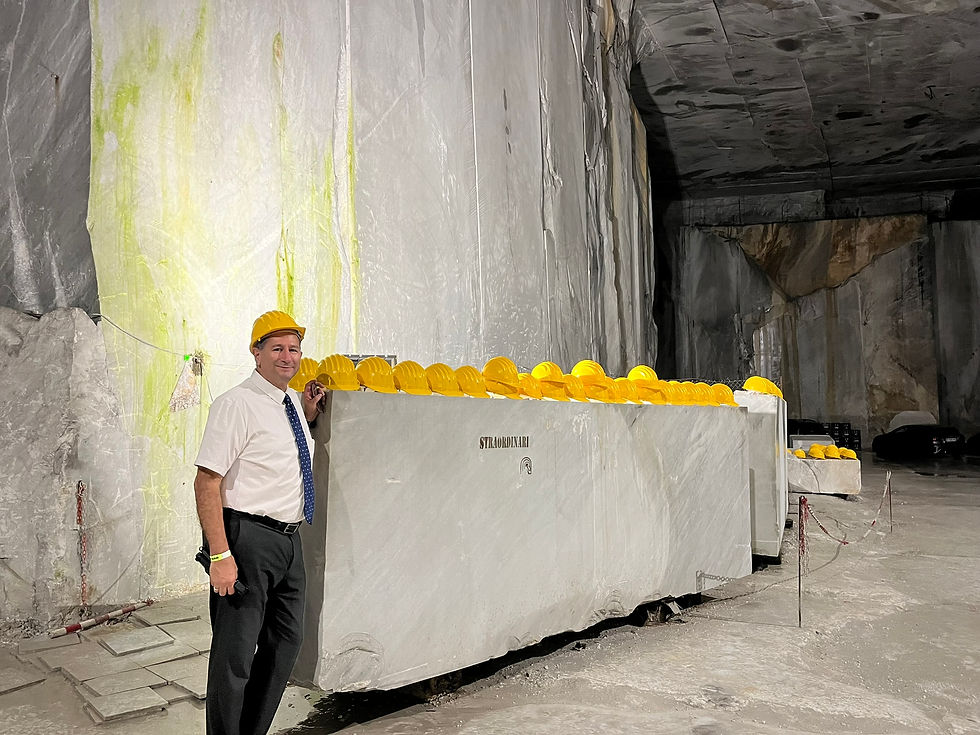


This has always been on our bucket list... check!

Beginning with the statues on Rome Temple Square, and ending with Bernini's David, these are our favorite marble pieces - all masterfully sculpted from Carrara marble. We have been blessed to spend time with each one.
HISTORICAL SUMMARIES: The Church of Jesus Christ's Rome Italy Temple Visitors' Center features marble replicas of Bertel Thorvaldsen's Christus and the Twelve Apostles, which were digitally scanned from the originals in Denmark and carved from Carrara marble, the same type of marble used by Michelangelo. These statues, installed in 2019, represent a homecoming of sorts for the original statues' artistic lineage, connecting ancient quarrying to the modern site of the Church's first temple in a biblical land.
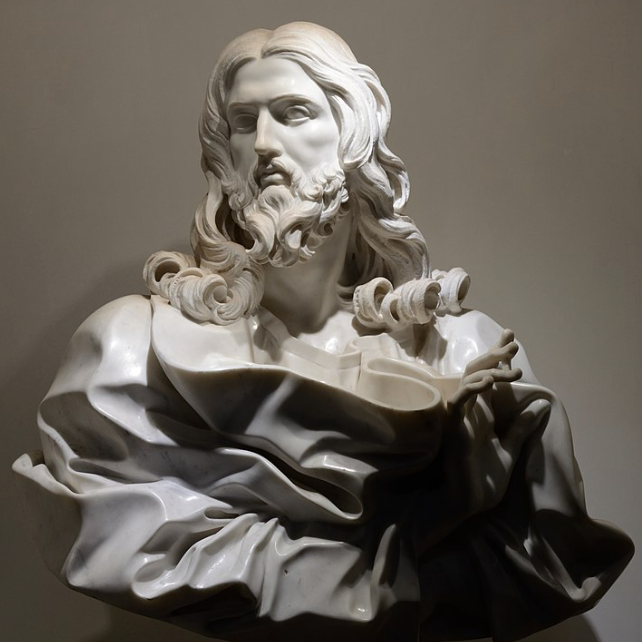
Bernini's sculpture Salvator Mundi, his last work and a marble bust of Christ, was completed in 1679 and is housed in the Basilica of San Sebastiano fuori le mura in Rome.

The Veiled Christ is an 18th-century Neapolitan masterpiece carved from Carrara marble by Giuseppe Sanmartino in 1753, commissioned by Raimondo di Sangro for the Sansevero Chapel, Naples. The statue depicts Christ lying on a bed, covered by a remarkably realistic, transparent marble shroud, which led to myths of alchemical "marbling" processes, though it is in fact a testament to the sculptor's extraordinary talent. It is a central attraction at the Chapel, known for its emotional depth and technical perfection.

Michelangelo's Pietà is a Renaissance marble sculpture created between 1498–1500 from a single block of Carrara marble. It depicts the Virgin Mary holding the body of Christ on her lap after the Crucifixion, embodying a powerful theme of pity and maternal love. The masterpiece, known for its intricate detail, emotional depth, and harmonious composition, is the only work Michelangelo ever signed and is now located in St. Peter's Basilica in the Vatican.
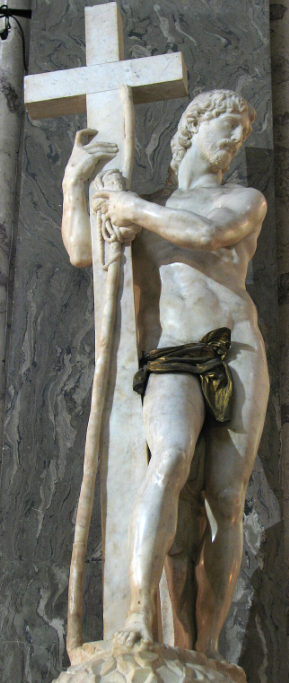
Michelangelo's sculpture, the Risen Christ (Cristo della Minerva), is made from Carrara marble. The final version, completed in 1521, was carved from a new block of Carrara marble after the original block for the first version was abandoned due to a visible black vein. This iconic High Renaissance statue is housed in the Church of Santa Maria sopra Minerva in Rome, right behind the Pantheon.

Gian Lorenzo Bernini's David, carved from Carrara marble between 1623-1624, is a dynamic Baroque sculpture depicting the biblical hero at the peak of his exertion, moments before unleashing a stone at Goliath. Commissioned by Cardinal Scipione Borghese for his villa, now the Galleria Borghese, the work embodies the Baroque style's emotional intensity and naturalism, a departure from the calm idealism of the Renaissance, and aims to draw the viewer into the unfolding drama of the battle.

After our quarry adventure, we headed through Tuscany to the sea town of Livorno.

We ate at a beautiful restaurant overlooking the sea.


We were staying the night at a B&B in Pisa, so before we called it a day, we stopped by to peak at the Baptistry, the Cathedral (which is a Jubilee Church) and the Leaning Tower of Pisa. We have seen quite a few baptistries in our neck of the woods. They look similar to this one in Pisa. Interestingly enough, "scholarly consensus and archaeological evidence confirm that early Christian baptism was predominantly by full bodily immersion, a practice supported by the Greek word for baptism (baptizo) and the symbolism of death and resurrection with Christ. Baptism by immersion was the common practice up until the 13th century."
In The Church of Jesus Christ of Latter-day Saints, baptism by full immersion in water, by a person holding priesthood authority, is a sacred ordinance - symbolizing a covenant to serve God, follow His commandments, and live a new, Christ-centered life. It represents the death, burial, and resurrection of Jesus Christ, cleansing from past sins, and a spiritual rebirth. Following baptism is confirmation by the laying on of hands, by a holder of the Melchizedek priesthood, to receive the gift of the Holy Ghost. This gift empowers individuals with spiritual direction, comfort, truth, and revelation, serving as a guide and source of peace and strength throughout their lives.


Every time we attend Church in another city, we run into either someone we know, or someone with whom we have a common tie. In this case, it was a tie to my sister Callie. Noah, who is living in Italy filming yachts (cool job!) is from Maine and knows not only my sister, but also the Knighton family (Jordan just finished his mission in Napoli)!

We had always wanted to visit Lucca!

Our favorite part is that the city is surrounded by walls and actually has doors that open and close!

HISTORICAL SUMMARY: Lucca is a picturesque medieval city in Tuscany, Italy, renowned for its intact Renaissance-era city walls that are now a popular public promenade for walking and cycling. The city boasts a well-preserved historic center with Roman and medieval influences, charming squares like Piazza Anfiteatro, ornate Pisan-Romanesque churches, and is the birthplace of composer Giacomo Puccini. Lucca offers a slower pace of life with a blend of history, culture, and authentic Tuscan experiences, making it a compelling destination in Italy.
Lucca was an Etruscan settlement before it became a Roman Latin colony in 180 BC. It became a strategic fortress during the 4th and 5th centuries, with restored walls and an arms factory. Lucca grew wealthy through the silk trade, which began in the 11th century and rivaled that of Byzantium, making the city a center for precious fabrics and political influence. In the early 16th century, Lucca embarked on the construction of its massive, well-preserved Renaissance walls, which remain a distinctive feature of the city.

The town square is set up like a market, with booth after booth selling antique wares. The eclectic energy just pulls you in!


The buildings were colorful, the cobblestone streets so charming, and the towers with Church bells caused our minds to wander and wonder - what would life have been like during Roman, Medieval, or Renaissance times?
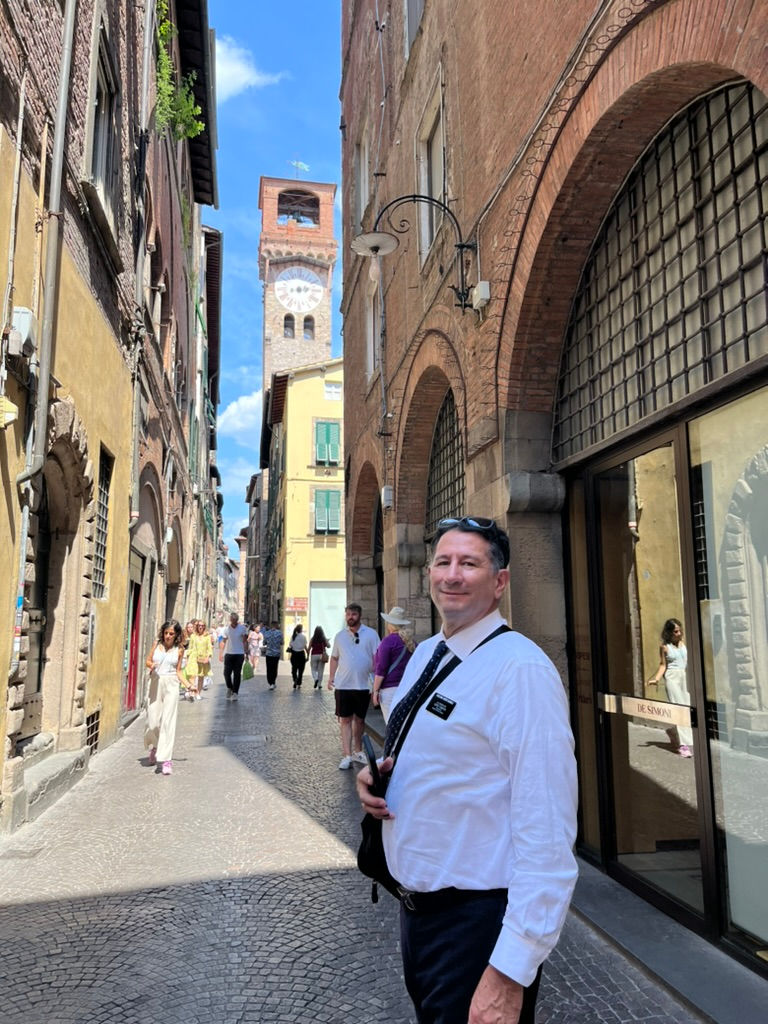

We thought this gelateria hands down has the best name!

Taking a Sunday drive through Tuscany was pretty dreamy!


Our next quick stop was a walk through San Gimignano.
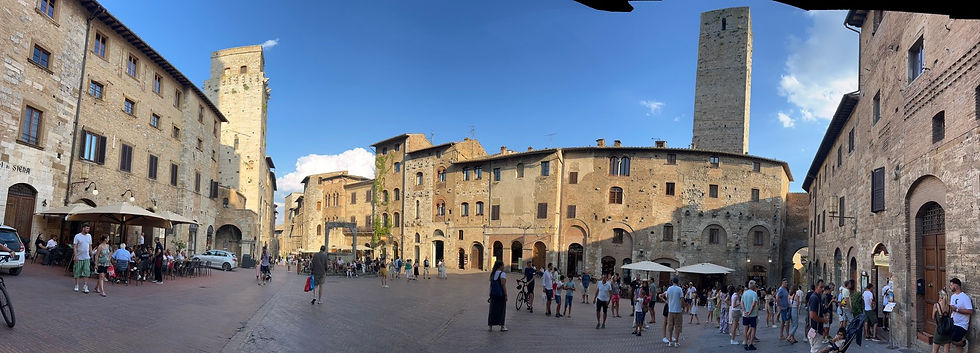
HISTORICAL SUMMARY: San Gimignano is a picturesque, well-preserved medieval hill town in Tuscany, Italy, renowned for its striking skyline of 14 surviving medieval towers and its designation as a UNESCO World Heritage Site. Known as the "Medieval Manhattan," it was once an important stop for pilgrims on the Via Francigena and a symbol of wealth and rivalry among powerful merchant families who built the towers for prestige and defense. Today, the town offers visitors a unique opportunity to step back in time, with its historic architecture, charming streets, and beautiful Tuscan landscape of vineyards and wheat fields.
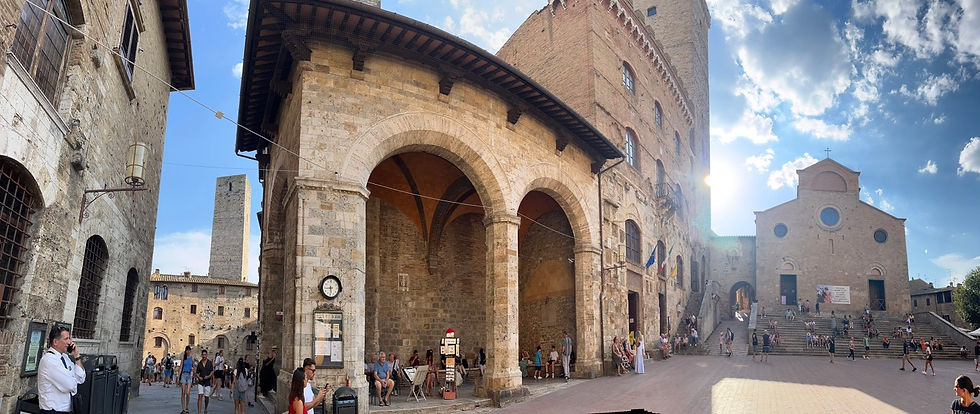
It was fascinating and dreamy!

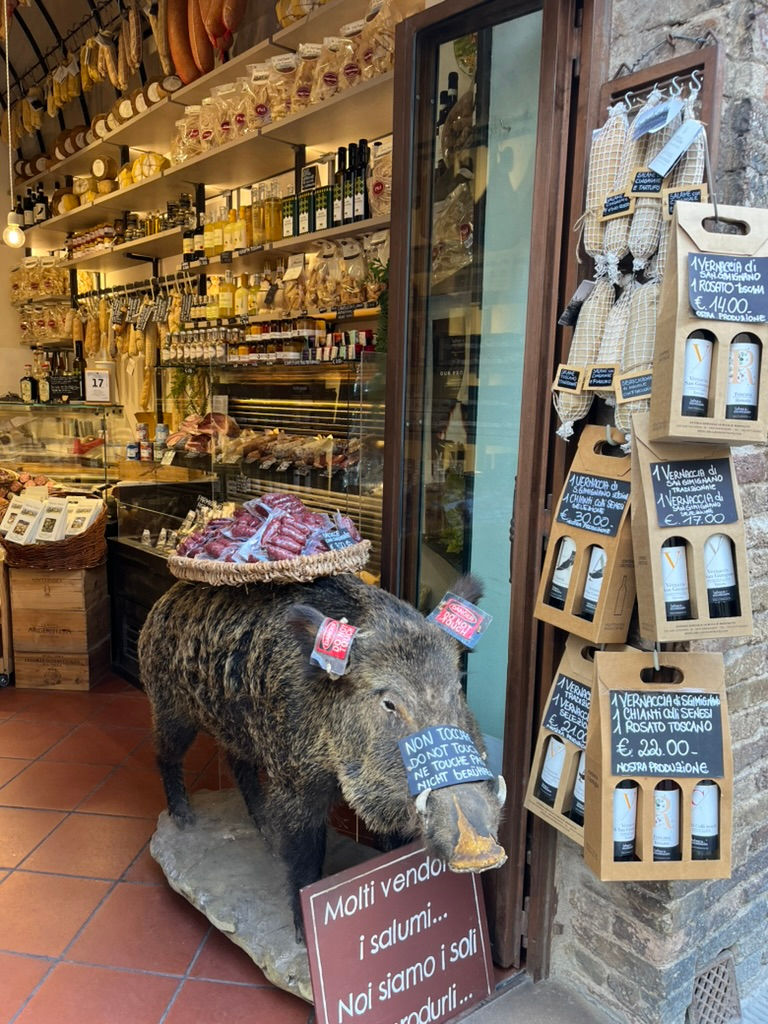

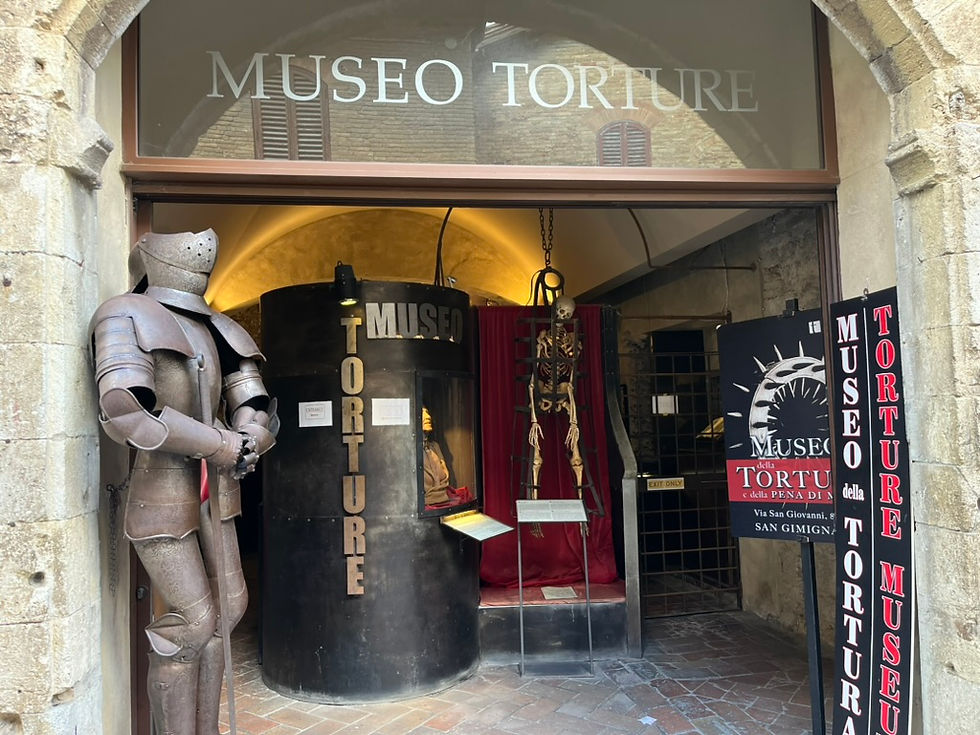
We didn't go in the torture museum, but we were very curious about it!

"The roads of San Gimignano were walked by historical figures including pilgrims on the Via Francigena route to Rome, as well as merchants, knights and travelers during the Middle Ages. Later, during World War II, the roads saw the passage of the French army who liberated the town, and today, they are walked by countless tourists." Now the Montagnolis have added their footprints!

We stayed the night at a hotel not too far from Volterra. It was also a stop on our bucketlist, so after a good night's sleep and a few missionary tasks, we headed that way.

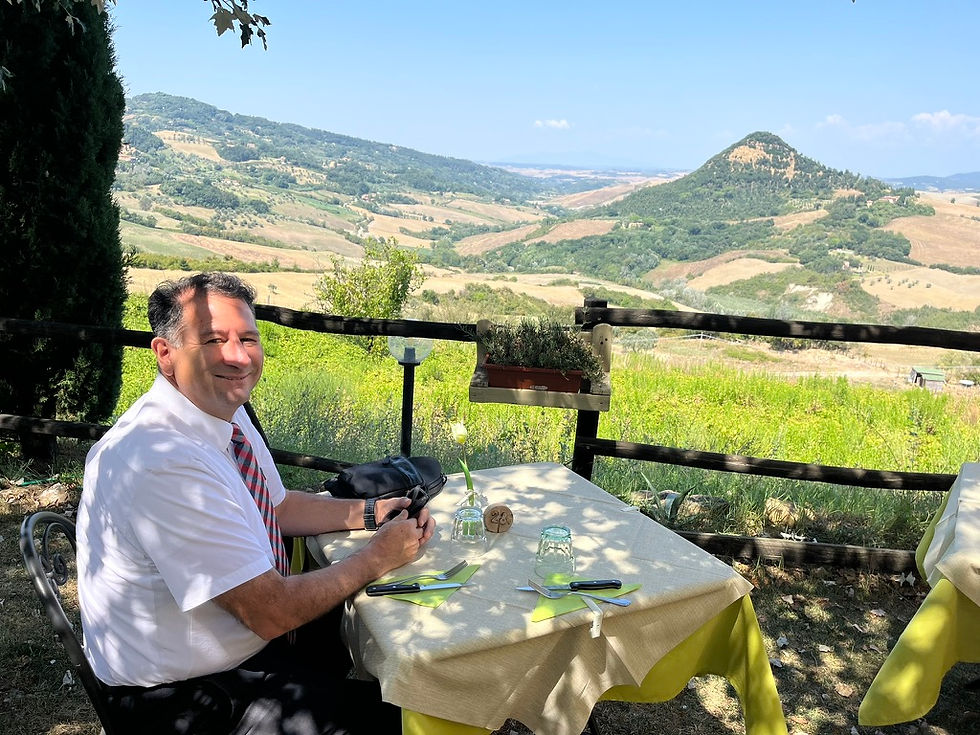
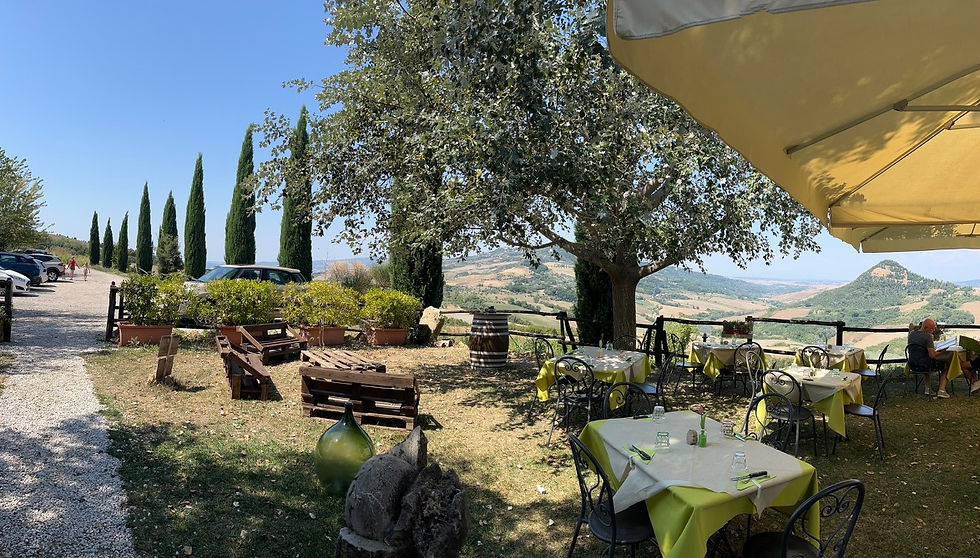
We were driving in the picturesque area outside Volterra and saw this charming restaurant. Of course, we had to stop and were thrilled it was open for an early lunch!

It was perhaps our favorite lunch spot ever! It wins hands down in ambiance.

We took lots of photos, so you could feel you've been there too!

It is called "Happy Villa" - and it definitely fits the bill!




Our final stop before heading home was Volterra. We loved it!!!
HISTORICAL SUMMARY: Volterra is a historically rich, walled Etruscan and medieval hilltop town in Tuscany, Italy, known for its ancient Etruscan ruins like Porta all'Arco and Roman theater, medieval architecture including the Palazzo dei Priori and Cathedral, and its ongoing alabaster carving craftsmanship. Perched on a hill with panoramic views, it offers a less crowded alternative to other Tuscan towns while providing significant historical sites and artisanal products.

It was like something straight out of a movie! Think "Knight's Tale."

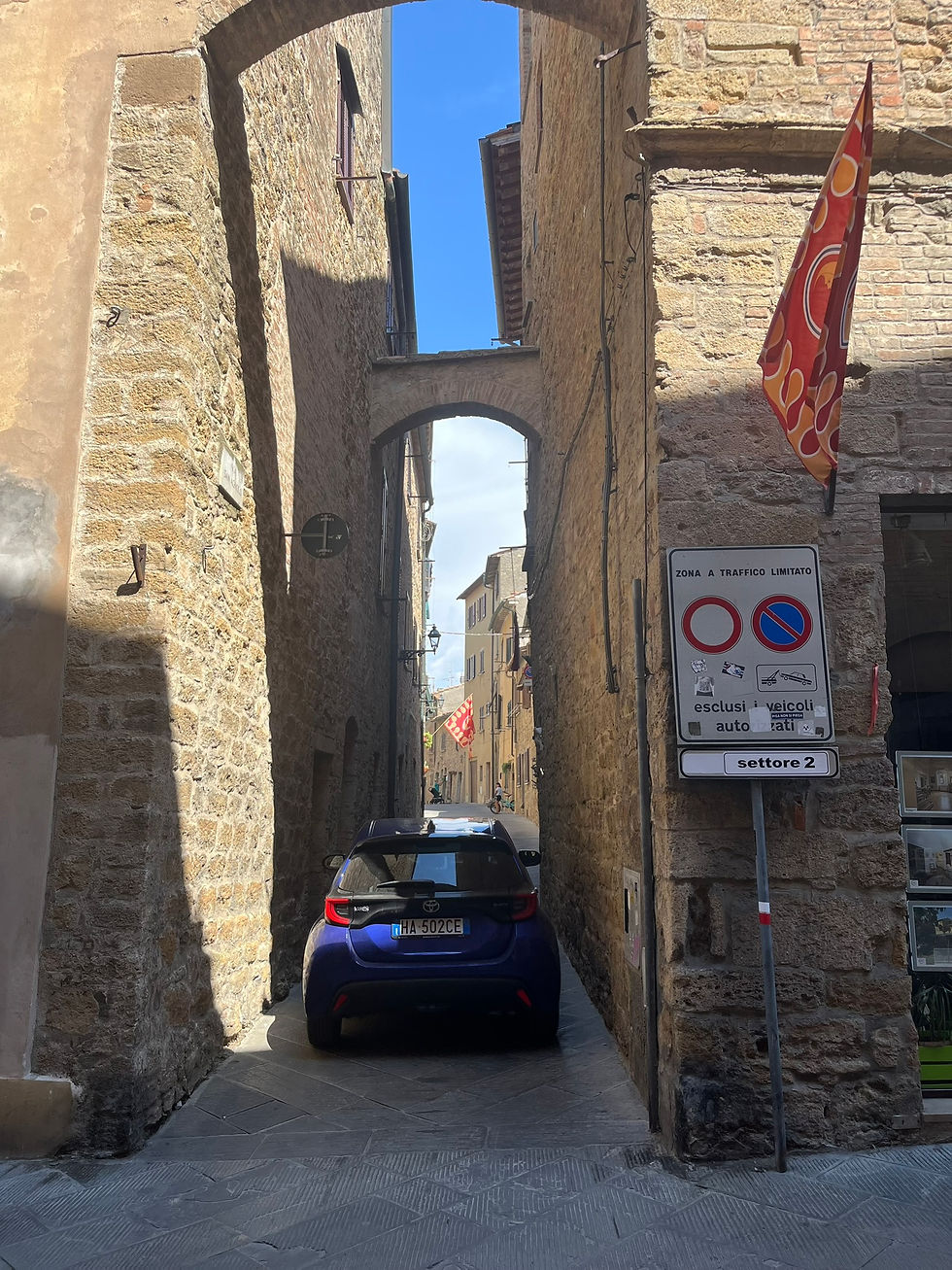

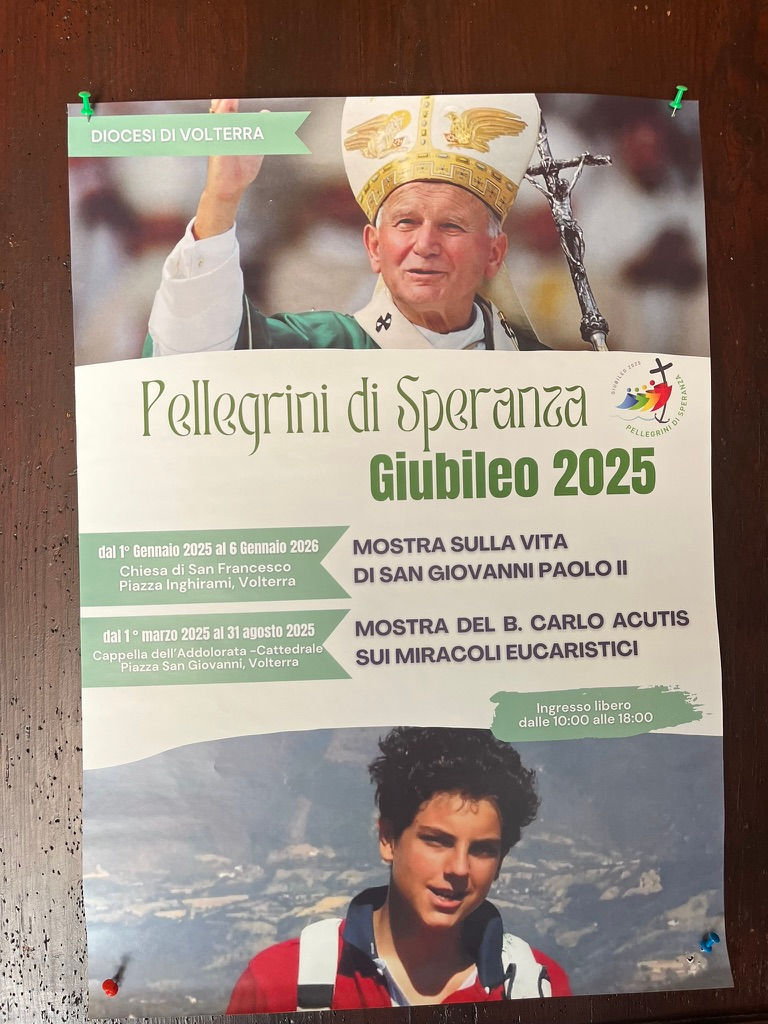

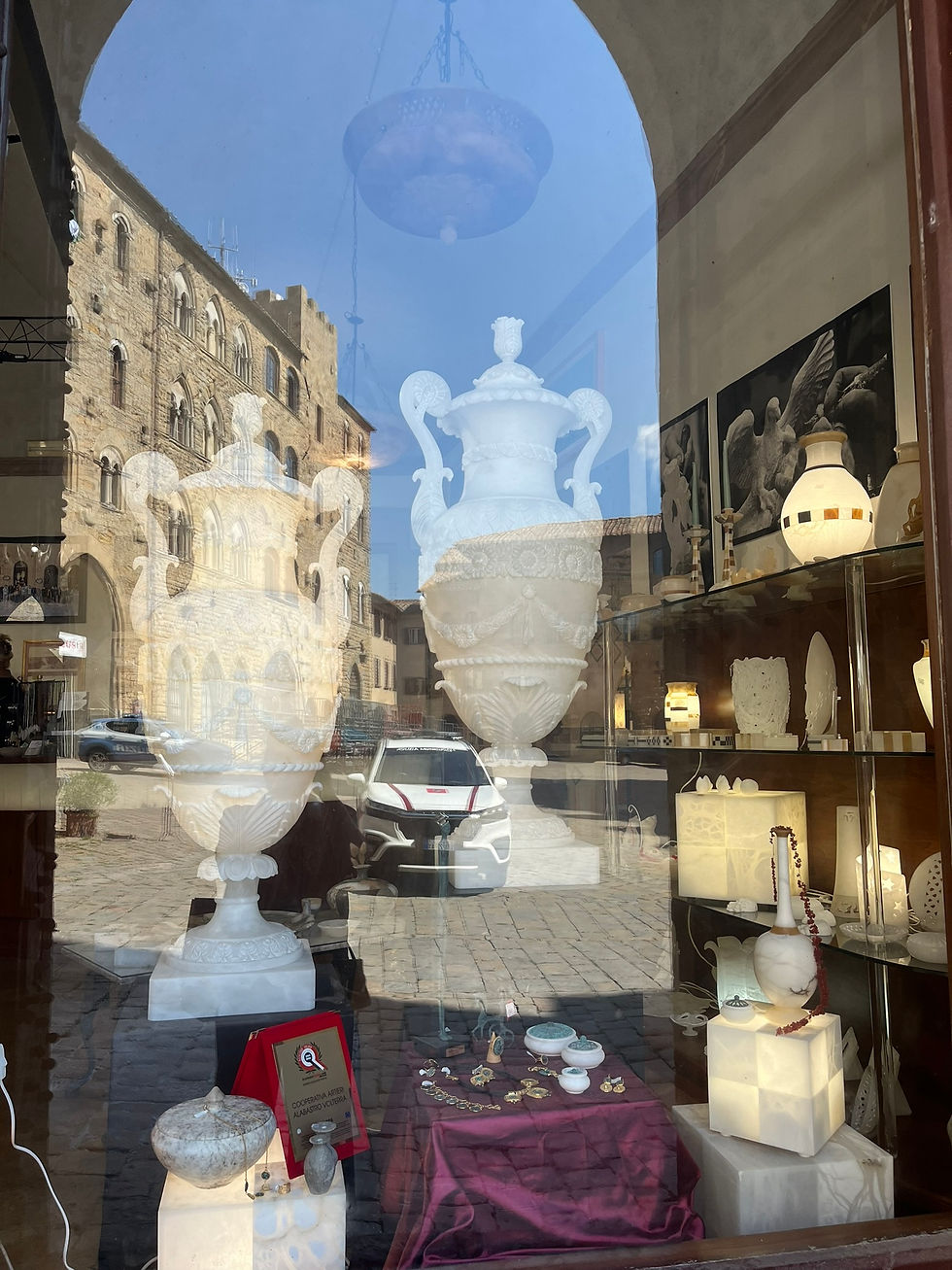

Volterra's history spans over 3,000 years, beginning as a major Etruscan city (Velathri) known for its wealth from metal mines and salt works, which led to its strong alliance with Rome. After the Roman conquest, it became an important municipality and a center for Christianity. The medieval period saw prosperity as a center for alabaster carving, a tradition that continues today.
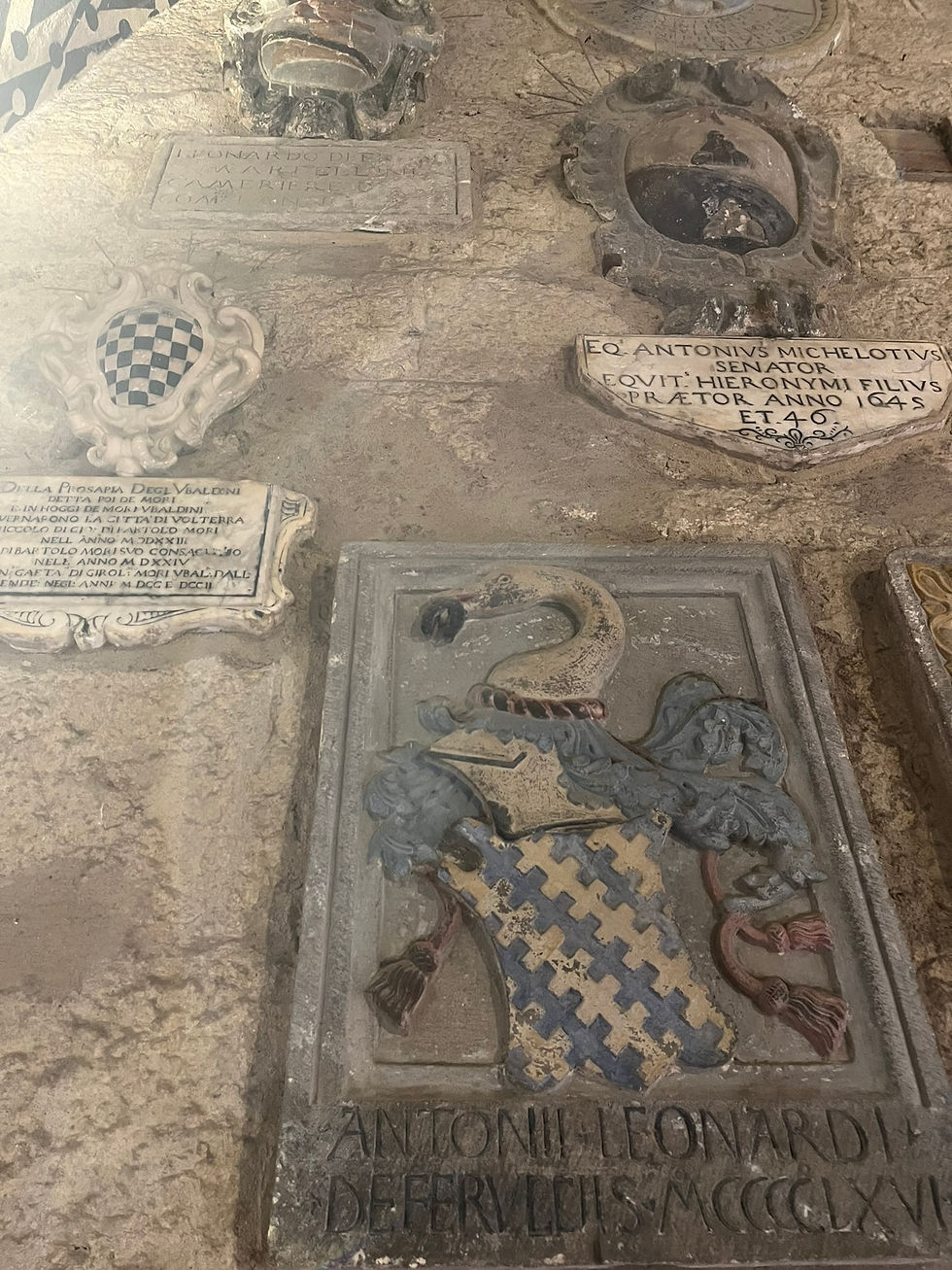
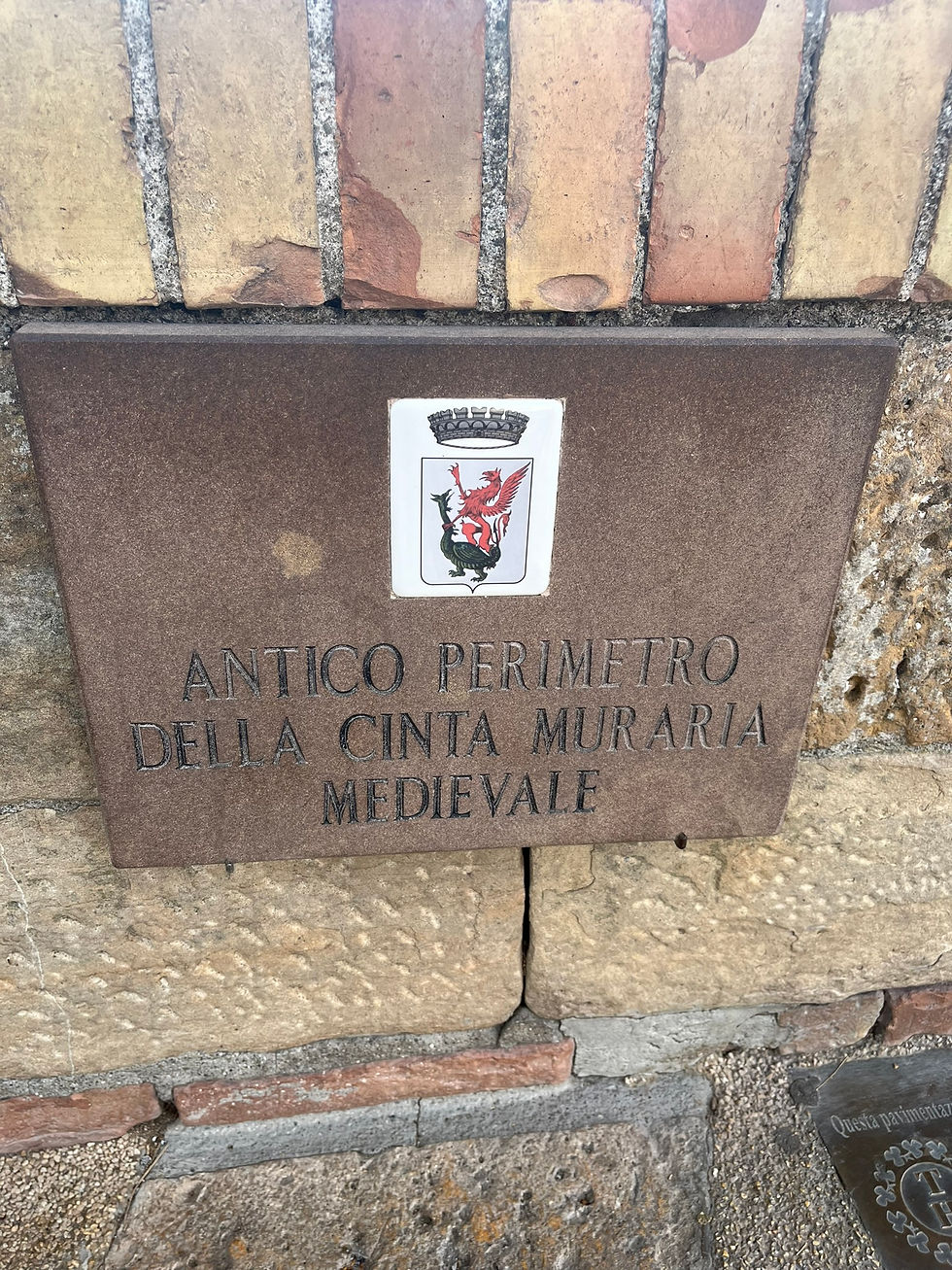
Volterra families, historically linked to Etruscan and medieval patrician classes, featured coats of arms as symbols of status and lineage, often reflecting their prominent roles in governance or significant local contributions, such as the Caecina family's sponsorship of the Roman Theatre, as seen in Volterra's historical records and architecture. Specific coats of arms would be unique to each family, passed down from generation to generation, and could be found on their buildings, shields, or other personal effects.


We were so thrilled to have the opportunity to slowly drive home - and stop and see a few of these towns we had always wanted to visit. We laugh about our missionary assignment and the hours we keep! At the Conference in Bologna, we were up early and going strong until about midnight. After a week of that, we were happy to take a couple of p-days and go at a slower pace!

The drive home was picturesque.

You just don't see these kinds of things driving around in America.

We fell in love with the Tuscan cypress trees.


As the sun set on our "long way home" birthday trip, we counted our many blessings. For as long as we can remember, we have been talking about, saving for, and hoping to serve together as companions in the Italy, Rome mission.
Elder Richard G. Scott once said,"Yes, you and I should count our blessings, but we should also make them count!" We are making our mission count! We love the quote, “Joy does not come from what you do, it flows into what you do and thus into this world from deep within you.” President Nelson said, “The joy we feel has little to do with the circumstances of our lives and everything do to with the focus of our lives.”
As we focus on helping others "Come unto Christ and be perfected in Him" - our joy is full! We are most definitely finding joy in our journey! With love, we invite you to do the same!
Love,
Sorella and Anziano Montagnoli
Martha & Cliff


Comments